

NZ Solar Power Costs: Prices & Payback Guide (2026)
Written by
Kristy Hoare, Founder & Solar Market Research Specialist
Last updated:
In 2026, home solar power systems in New Zealand cost an average of $2.04 per watt. That works out to around $12,000 for a fully installed 6kW system. Based on data from 151 verified local installations, you can expect to pay roughly $7,000 for a 3kW system, through to $19,000 for a 10kW system.
2026 Quick Pricing Guide
- 3kW System: ~$7,000 (Small homes)
- 6kW System: ~$12,000 (Average NZ home)
- 10kW System: ~$19,000 (Large homes + EV)
- Cost Per Watt Benchmark: $2.04/W
- Average Payback: 6.9 years
- Average Battery Cost: $13,000 for a typical 11kWh battery
What Is The Cost Of A Solar Panel System In New Zealand?
The cost of a solar panel system largely depends on the size of the system and the type of roof it’s installed on. Here’s a snapshot of typical residential solar system sizes in New Zealand and their approximate pricing.
| System size | Number of 500w panels | Typical household | Cost (incl GST, fully installed) |
|---|---|---|---|
| 3 kW | 6 | Small homes, 1–2 people | $7,000 |
| 5 kW | 10 | Medium homes (2–3 people) | $10,500 |
| 6 kW | 12 | Common size in NZ (Average home, heat pump) | $12,000 |
| 6.6 kW | 13 | Popular search size (Larger home, high daytime use) | $13,000 |
| 8 kW | 16 | Large homes, EV charging + battery storage | $15,500 |
| 10 kW | 20 | Large homes, spa/pool, EV + battery storage | $19,000 |
| 15 kW | 30 | Very large home or small business | $26,000 |
*Please only use these prices on this page as a guide. Note: Prices represent NZ industry averages for standard single-storey metal roof installations using Tier 1 panels and string inverters.
Get The Best Price For Solar
Use our free 3 Solar Quotes Service to compare competitive prices from top-rated installers.
How Much Does Solar And Battery Cost In New Zealand?
Adding a battery roughly doubles the price of your solar system, with the cost mostly coming down to how much storage you want. Here’s a look at some common solar and battery setups Kiwis are installing, and what you can roughly expect to pay fully installed.
| Solar + battery | Typical household | Typical cost | Price range |
|---|---|---|---|
| 8 kW + 6 kWh | Smaller home, some evening cover | $23,000 | $22,000 - $26,000 |
| 8 kW + 13.5 kWh | Average home, most evenings covered | $32,000 | $30,000 - $36,000 |
| 10 kW + 10 kWh | Larger home, heat pump, high daytime use | $32,000 | $24,000 - $39,000 |
| 10 kW + 13.5 kWh | Larger home, EV charging or high evening use | $34,500 | $29,000 - $39,500 |
| 14 kW + 20 kWh | Very large home, EV, pool or spa | $48,500 | $46,000 - $70,000 |
*Please only use these prices as a guide. Figures are based on My Solar Quotes survey data from verified solar and battery installations over the past 12 months. Most households land between $30,000 and $35,000. The price spread within each size comes down to multiple variables: example: roof type, switchboard upgrades, household requirements, brands, extra safety features required etc.
Read the full breakdown: What Kiwis Are Actually Paying for Solar and Battery Systems (2026 Data)
Pricing Trends For Solar Power In New Zealand
In 2008, a 3kW system would set you back $40,000.
Today? You’ll pay around $7,000 fully installed.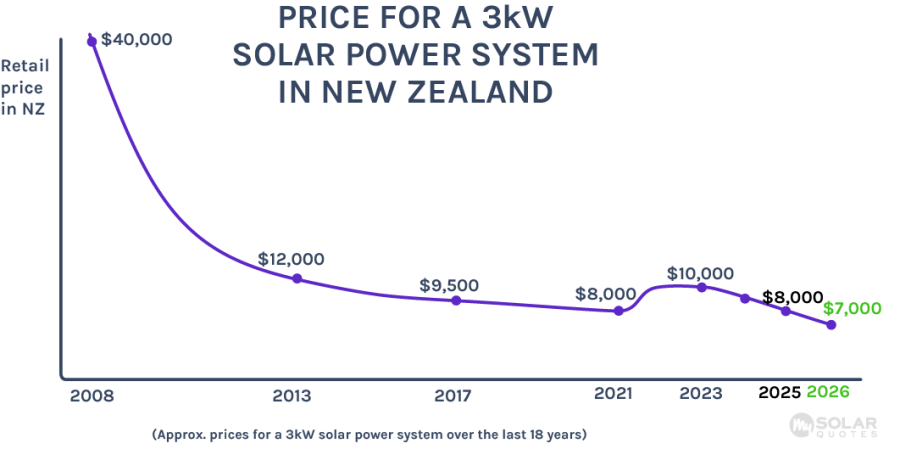
How We Calculate New Zealand Solar Pricing (Data & Methodology)
Unlike estimated guides, My Solar Quotes publishes real pricing data directly from Kiwi homeowners and installers.
Primary Survey Data: Our 2026 benchmarks are built from 151 verified residential solar installs and 63 battery installations across New Zealand who all had a system installed by a SEANZ member.
Statistical Rigor: The NZ average install price sits at $2.04/watt, with a 25th to 75th percentile range of $1.74/W to $2.36/W depending on roof complexity, microinverters, and premium panel brands (e.g., SunPower, REC).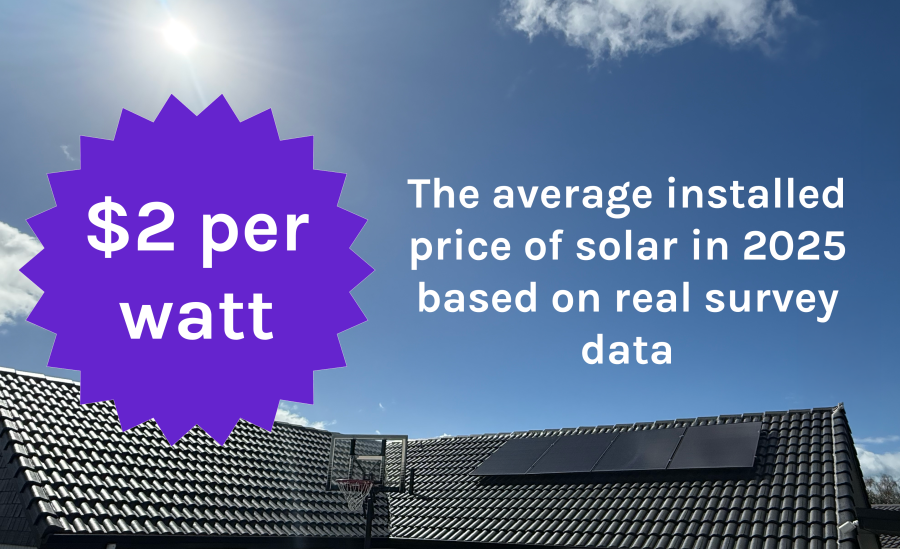
Data Author: Data compiled and analyzed by Kristy Hoare, Founder and Solar Energy Consultant at My Solar Quotes.
Want the full statistical breakdown? Read our complete analysis: The $2 Per Watt Reality: What Kiwis Are Paying for Solar
Get Solar Panels The Easy Way, Get 3 Free Solar Quotes Now
Factors Affecting Solar System Prices
- Roof Type: Metal/tin roofs are more cost-effective to install solar panels on, while tile or shingle roofs may incur extra costs.
- Switchboard Upgrades: Older or non-compliant switchboards may need to be replaced.
- Scaffolding: Required for homes with multiple stories.
- Travel Costs: Installations in rural or remote areas may incur additional charges.
- Lines Company Fees: Some companies charge a small fee ($80–$350) for connecting your system to the grid.
Don't Forget: Lines Company Application Fees
When your solar system connects to the grid, your local lines company may charge an application fee to approve the connection.
Around 9 of NZ’s 30+ lines companies charge no application fee for standard residential solar systems, including Aurora Energy, Powerco, Vector and MainPower. Where fees do apply, they are typically around $80–$350, with the average sitting at roughly $140. Extra inspection fees can sometimes apply, but these are less common.
Most solar installers take care of the application for you, but it’s worth checking whether the fee is included in your quote.
Check your local lines company’s fees and export limits>
Shop Around For A Solar Panel System

Not all solar deals are created equal.
Prices, equipment quality, warranties, and installer experience can vary wildly between providers. That’s why getting multiple quotes isn’t just smart - it’s essential.
Here’s why shopping around pays off:
- Better Pricing: Some quotes can be thousands of dollars apart for similar systems.
- Higher Quality Gear: Different installers offer different brands - and not all panels, inverters and batteries are equal.
- Stronger Warranties: Look for installers offering solid performance and workmanship guarantees.
- Tailored Solutions: One installer might recommend a system that better suits your roof aesthetics, energy use, or future battery plans.
- Best Service: Talking to a few installers lets you quickly spot who’s responsive, knowledgeable, and easy to work with - so you end up with a team you enjoy engaging with.
Tip: Get 3 quotes through My Solar Quotes and easily shop around trusted local installers - saving time, money, and locking in the best deal for your home.
How Many Solar Panels Do You Need?
Figuring out how many solar panels you need for your home in New Zealand doesn’t have to be a head-scratcher. It all comes down to your household’s energy habits, roof space, and how much sunshine your area gets.
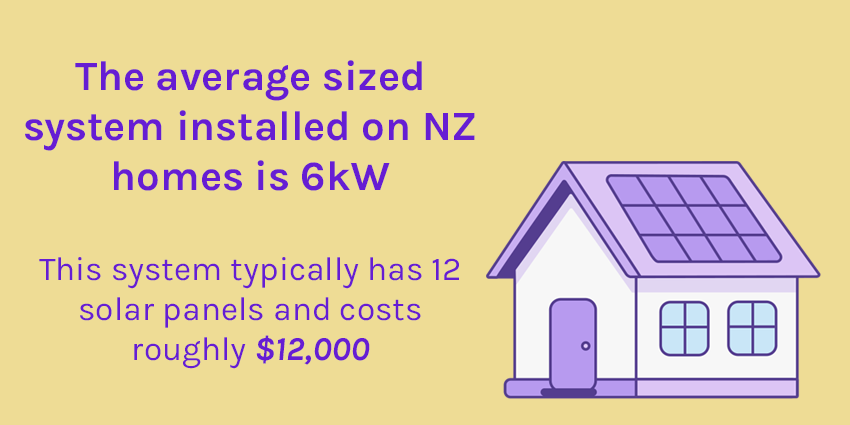
Most Kiwi homes opt for systems between 4kW and 8kW, which translates to around 8 to 16 solar panels. The sweet spot for many is a 6kW system (roughly 12 panels), as it covers a hefty chunk of the average home’s energy needs at a more affordable price tag.
But how do you decide what’s right for you? Let’s break it down with three simple approaches:
- Max Your Budget: If you’re aiming to squeeze in as much solar as you can afford, start by getting 3 quotes. Let the installers know your budget, and they’ll recommend the best setup within your price range.
- Best Return On Investment: Use our handy solar calculator to tweak system sizes and see which one delivers the best return on investment. Or, skip straight to getting quotes and let the experts do the math.
- Go Big on Roof Space: Want to go all out? Install as many panels as your roof can handle. When you request free 3 quotes, solar installers can use satellite imaging and clever software to map out your roof and figure out the maximum panel count for your space.
Is Solar Power Worth It?
For most Kiwi homes, yep, I think so.
The median payback on a solar-only system in New Zealand is currently 6.9 years, based on 279 residential solar quotes people received in 2026. That works out at roughly a 14% return a year - and every time electricity prices go up, the numbers tilt a little further in solar's favour.
Most panels now come with 25 to 30 year performance warranties. So once the system has paid itself off, you could be looking at around another 18 years of electricity you're simply not buying from your power company. Pretty decent.
System size matters quite a bit though. Systems under 5 kW have a median payback of 11.1 years, while systems in the 5 to 12 kW range come in much better, at between 6.6 and 7.0 years.
This is why going small just to save a bit upfront can be a false economy. The electrician still has to turn up, you've still got an inverter, paperwork, scaffolding and all the rest of it - whether you're putting six panels on the roof or twenty.
And if you're worried about moving house before you've got your money back, that's not necessarily a problem either. A major New Zealand study found solar panels increase home values. So you're getting the power bill savings while you live there, then potentially getting some or all of that investment back when you sell.
Want a number for your actual house rather than the NZ median? Our solar calculator works out your estimated annual savings and payback together.
See the full 2026 payback data here.

Buyers Guide for Solar Power in New Zealand
My Solar Quotes Buyers Guide for home solar panel installations takes you through the steps of purchasing a solar power system for your home, and the factors you will need to consider at each step.
The guide includes ‘how to avoid dodgy traders’ and ‘details to look out for when comparing quotes’. View the solar power buyers guide here.
How Much Does a Solar Panel Cost?
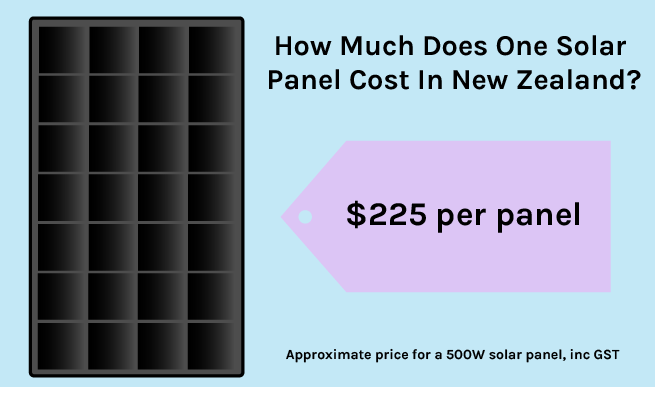
A single 500W solar panel in New Zealand costs around $230. But panels are just one part of the puzzle - you’ll also need an inverter, mounting gear, and professional installation to turn those panels into a fully functioning solar power system.
Find out how to choose solar panels here>
Should I Wait For The Price Of Solar To Fall?
Short answer: No
Solar prices have already fallen dramatically - the cost of a grid-connected system has dropped by over 75% since 2010. But most of that big drop is behind us. Any further savings on a 3 kW system are likely to be a few hundred dollars a year at most. Prices could even creep up as labour and shipping costs rise.
Meanwhile, power prices keep heading the other way. Every year you wait is another year of paying for power your panels could have generated.
What about the technology? Solar panel efficiency is simply how much sunlight a panel turns into electricity. Over the past decade, commercial monocrystalline panels have improved from around 17% to just under 25%, according to Fraunhofer ISE’s Photovoltaics Report. That’s roughly 0.8 percentage points a year.
So yes, panels are getting better. But on your roof, waiting a year might mean slightly more power from the same space, while missing out on a whole year of power bill savings. I wouldn’t wait for that.
Solar Battery Prices
Batteries can be used to store solar power for use at night, during times of peak electricity demand and during blackouts. Learn more about solar batteries here.
Prices for a battery storage system accompanying a grid-connected solar power system will largely depend on the battery’s storage capacity, followed by the brand's reputation, quality and special features.
Generally, the more storage capacity is installed, the more expensive it is. Find out if solar batteries are worth the cost or see the approximate prices for lithium-ion solar batteries.
| Solar Battery Capacity | Approximate Price Range |
| 5 kWh | $6,000 to $7,500 |
| 10 kWh | $10,000 to $13,000 |
| 15 kWh | $14,000 to $18,000 |
Note: All prices include GST
Compare Solar Battery Types And Prices>
Get 3 Free Quotes For Solar Panels And Batteries>
The Upfront Cost: Financing Your Solar System
At around $12,000 for a typical 6kW solar system, the upfront cost can be a hurdle. The good news is you may not need to pay for it all at once.
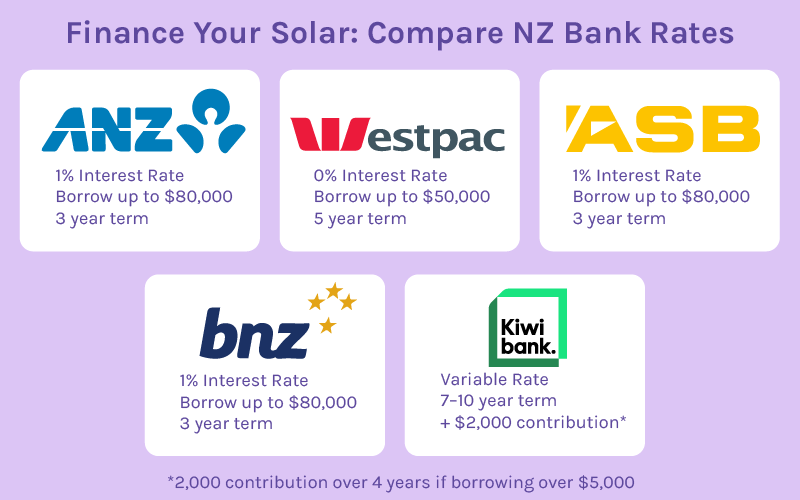
Several major NZ banks offer low-interest green loans for solar panels, batteries and other home energy upgrades. In many cases, these are far cheaper than using a standard personal loan or credit card.
Depending on your bank, you may be able to access:
- 0–1% interest
- Loan terms of up to 5 years
- Borrowing of up to $80,000
- Finance for both solar and battery systems
You’ll generally need a solar quote before applying for a loan from these banks, so it’s worth checking what your own bank offers.
Compare NZ solar finance options>
The 6.6kW Solar Myth: What Size Do NZ Homes Really Need?
If you've been reading online guides, you may have seen "6.6 kW" mentioned as the "most popular" solar system size. In New Zealand, this is a myth carried over from Australian market rules.
- The Australian Rule: Australia has a federal solar rebate (STC scheme) that caps single-phase 5 kW inverters at 6.6 kW of panels to qualify for maximum subsidies.
- The NZ Reality: New Zealand has no government rebates and no 6.6 kW restriction. Kiwi homeowners build systems based on actual roof space and household consumption.
- What Government Data Shows: According to the Energy Authority (EMI), the average residential system installed across New Zealand is 5.7 kW.
- What Our Installers See: Our survey of 151 verified installations shows customers are increasingly installing larger systems, with an average of 7.89 kW — reflecting growing demand for energy independence and battery compatibility.
The Bottom Line: Size your system based on your roof space, consumption, and future battery plans - not arbitrary Australian thresholds. That's why our installers work with your home, not one-size-fits-all rules.
Ready To Get Solar Panels On Your Roof?
Ready to take the next step? Use our free quote service to find the best deal on solar power and start saving on your electricity bills.
FREQUENTLY ASKED QUESTIONS
About 9 of NZ's 30+ lines companies charge no application fee for residential systems under 10kW - including Aurora Energy, Powerco, Vector, and MainPower. If your area charges fees, expect $80–$350. These should be factored into your budget but are often handled by installers and often included in their quotes.
Nearly. Adding a residential battery costs approximately $13,024 on average (based on our survey of 63 battery installations). Battery pricing averages $1,219 per kWh installed, so a typical 11.1 kWh system costs around $13,500, and a larger 13.5 kWh system costs roughly $16,500.
The rough math: A typical 6kW solar system costs roughly $12,000, and a battery adds another $13,000... so yes, adding a battery roughly doubles your total system cost.
While batteries significantly extend your payback period, they deliver blackout protection, backup power during outages, and energy independence, benefits many Kiwi households value beyond just financial returns. However, this varies by region, system size, and battery capacity, so request quotes to understand the exact cost for your situation.
NZ power retailers pay between 8c and 17c per kWh for excess solar power exported to the grid. While buy-back credits reduce your bill, maximum ROI is achieved through self-consumption using your solar energy during the day to offset retail electricity rates, which averages at 39c/kWh.
Major NZ banks offer dedicated solar green loans at competitive rates:
- Westpac Warm Up Loan: 0% interest, up to $50,000, 5-year term
- ANZ Good Energy Loan: 1% interest, up to $80,000, 3-year term
- ASB Better Homes Top-Up: 1% interest, up to $80,000, 3-year term
- BNZ Green Home Loan: 1% interest, up to $80,000, 3-year term
- Kiwibank Sustainable Energy Loan: Variable rate, 7–10 year term, plus $2,000 contribution towards system cost
All banks require (1) installation by a SEANZ-certified member, (2) a formal itemised quote, and (3) proof you can service the debt. From our knowledge, most of these applications are treated like home renovation loans, expect standard lending criteria and a credit check. Most approvals happen within days if you qualify.
No, for most standard homes. Under updated MBIE exemption guidance (effective late 2025/2026), standard residential roof-mounted solar systems no longer require building consent provided the weight load complies with standard building code thresholds.
The median payback on a solar-only system in New Zealand is 6.9 years, based on our own analysis from 279 residential solar quotes Kiwis received in 2026. Add a battery into the mix and that stretches out to 9.0 years.
System size makes quite a difference though. Systems under 5 kW are easily the worst value on the board - with a median payback of 11.1 years and a cost of $2.54 per watt. Mainly because a lot of the fixed costs are still there whether you're installing six panels or twenty - electrician, inverter, paperwork, scaffolding etc.
Once you get into the 5–12 kW range, the numbers get much better, with median payback sitting between 6.6 and 7.0 years.
Considering most solar panels come with 25 to 30 year performance warranties, that means a fairly typical solar system could give you around 18 years or more of effectively free electricity after it's paid itself off. Not too shabby.
One important caveat though - these are the payback figures written on the solar quotes themselves. So this is what NZ solar installers are currently projecting, not us looking back 10 years later and proving that's exactly what happened.
See the full 2026 payback data and breakdown by system size.
Quality Tier 1 solar systems in New Zealand average $1.74 – $2.36 per watt installed. If a quote significantly exceeds this, ask why (premium brand, complex installation, battery add-on, etc.). If it's much lower, verify the installer is SEANZ-certified and includes proper warranties. Also big box retailers advertise much cheaper systems, but often don't include installation costs and workmanship warranties.


